
Here is a polished reflection you can include in your assignment, portfolio, or Moodle course documentation:
Reflection on Developing My Online Mathematics Course
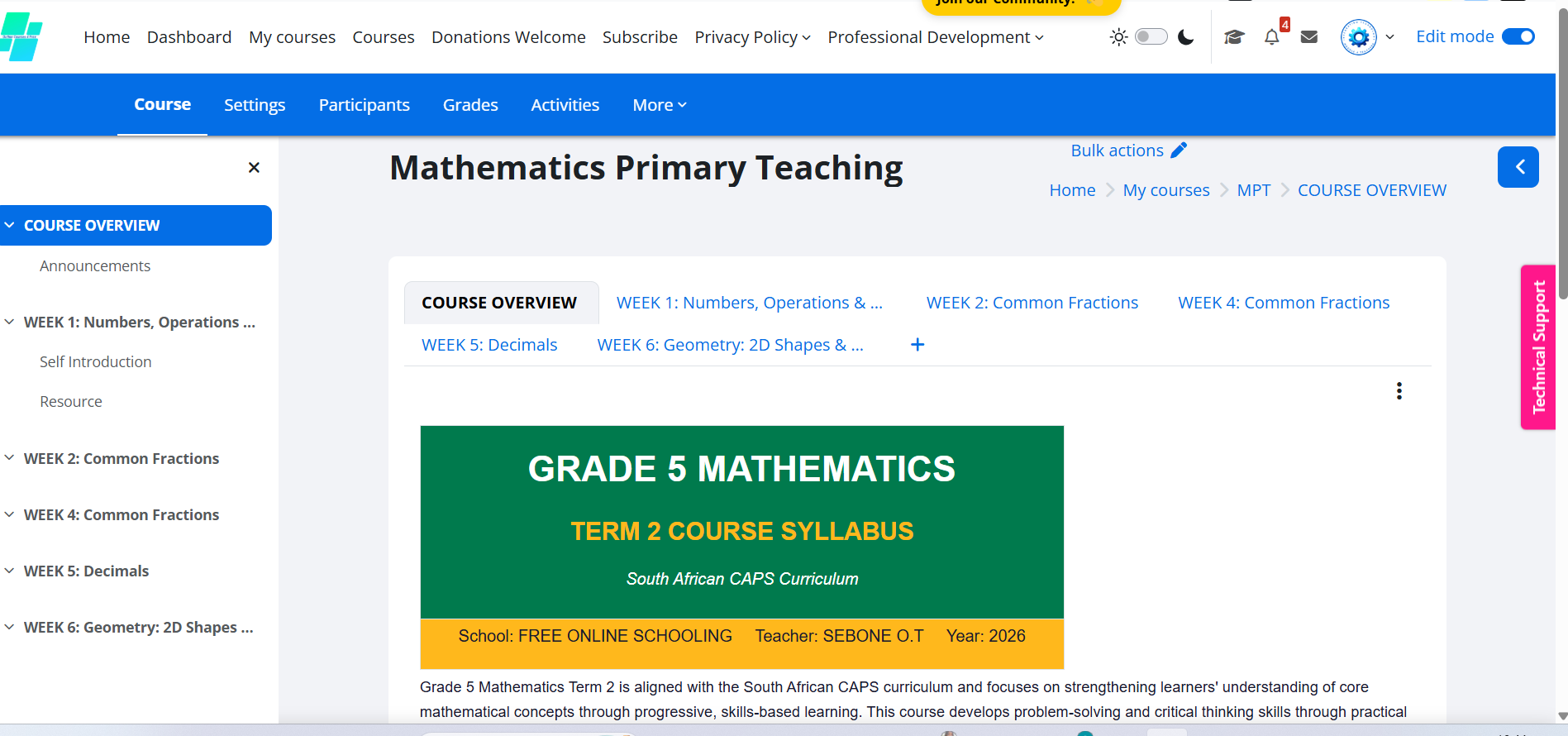
Creating this Grade 5 Mathematics online course has been both exciting and emotional for me. At the beginning of the process, I felt overwhelmed because this is something I have always dreamed about — becoming an online teacher and creating a meaningful digital learning space for learners. Seeing the course slowly come together on Moodle made me feel proud, motivated, and inspired.
Throughout the development process, I experienced mixed emotions. There were moments of enjoyment and creativity while designing activities, organising weekly sections, and aligning the course with the South African CAPS curriculum. I especially enjoyed structuring the course in a way that would make learning simple, interactive, and engaging for learners.
At the same time, I often felt anxious and uncertain about whether the course would deliver effectively and meet learners’ needs. I constantly questioned whether the layout, activities, and resources would support understanding and participation. However, this experience helped me realise that course development is a continuous learning process that improves over time through reflection, feedback, and practice.
One of the most valuable parts of this journey was discovering how artificial intelligence can support teaching and learning. Initially, I preferred Course Magic because it helped generate course structures quickly, but some features required payment. After exploring other tools, I found that Claude suited my needs better because it produced content exactly as I imagined it. For creating visual learning resources and designs, I found Canva AI very useful and efficient.
AI tools made the course creation process faster, more organised, and less stressful. They helped me generate ideas, structure content, create activities, and improve the professional appearance of my course. Instead of spending excessive time formatting and planning manually, I was able to focus more on learner engagement and curriculum alignment.
Overall, this experience strengthened my confidence in online teaching and educational technology. It showed me that with dedication, creativity, and the support of AI tools, it is possible to create a professional and meaningful online learning experience. I believe this course is only the beginning of my journey as an online educator, and I look forward to improving and expanding my skills further.